

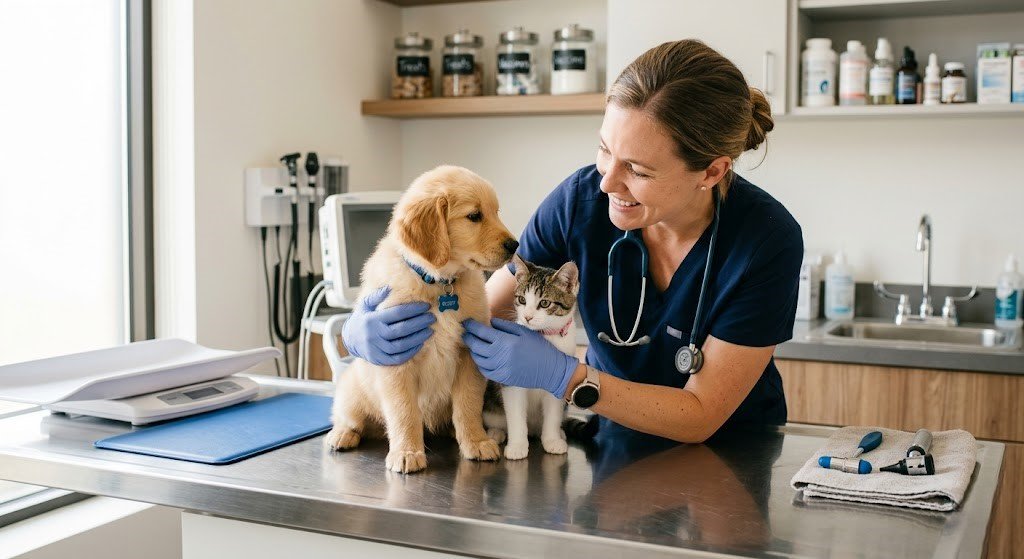
Bringing a new puppy or kitten into your home is an exciting journey filled with warmth, playfulness, and unforgettable memories. However, the first year of a young pet’s life is also the most critical period for establishing lifelong health, immunity, and behavior. Navigating early health protocols can feel overwhelming for pet parents, but following a structured approach to puppy & kitten veterinary care ensures your new companion stays protected against severe infectious diseases, internal parasites, and developmental issues.
Partnering with a certified veterinarian during these foundational months sets the stage for optimal growth, preventative wellness, and long-term companionship.
Key Takeaways
- Timely Vaccinations: Core vaccine series must start at 6–8 weeks of age and repeat every 3–4 weeks until 16 weeks to ensure full protection as maternal immunity fades.
- Early Parasite Control: Broad-spectrum deworming and continuous flea, tick, and heartworm prevention should begin immediately upon adoption.
- Spay & Neuter Timing: Most veterinarians recommend spaying or neutering before 5–6 months of age to maximize health benefits and reduce unwanted behaviors.
- Behavior & Socialization: Early socialization windows (up to 14 weeks for puppies, 9 weeks for kittens) are crucial for psychological wellness and stress-free vet visits.
- Nutritional Support: Feeding age-appropriate, balanced formulas supports rapid skeletal, brain, and organ development.
First Veterinary Visit: What to Expect & Preparation
Your pet’s first checkup should be scheduled within the first 7 days of coming home. This initial consultation establishes a health baseline and screens for congenital conditions such as heart murmurs, cleft palates, umbilical hernias, and early infectious signs.
Physical Exam Blueprint
During comprehensive puppy & kitten veterinary care visits, the clinical team conducts a thorough nose-to-tail physical exam:
- Ocular and Nasal Check: Inspecting for discharge, cloudiness, or respiratory congestion.
- Oral and Dental Screening: Assessing tooth eruption, bite alignment, and mucosal color.
- Cardiac and Pulmonary Auscultation: Listening for abnormal heart sounds or lung crackles.
- Abdominal Palpation: Checking for organ enlargement, pain, or fluid retention.
- Orthopedic Evaluation: Testing joint mobility and gait to catch early skeletal malformations.
Pro Tip for Pet Parents: Bring any shelter records, breeder medical history, and a fresh fecal sample to your appointment to assist your vet in detecting intestinal parasites like roundworms, hookworms, or giardia.
[Internal Link: Read our comprehensive guide on Preparing Your Home for a New Pet]
Comprehensive Vaccination Schedules (AAHA & WSAVA Standards)
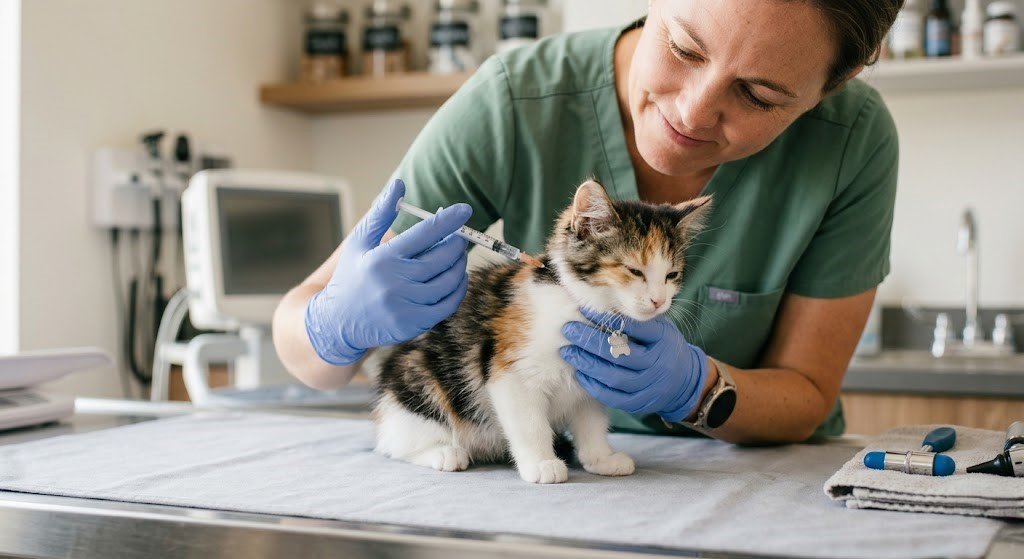
Vaccines are essential preventive medicine. Young animals inherit maternal antibodies from colostrum, which protect them early on but gradually decline between 6 and 16 weeks. Because antibody decay varies between litters, a series of booster shots given every 3 to 4 weeks is mandatory to ensure the pet creates its own active immunity.
AGE           PUPPY VACCINE SCHEDULE               KITTEN VACCINE SCHEDULE
6–8 Weeks     DHPP (Dose 1) + Deworming            FVRCP (Dose 1) + FeLV/FIV Test
10–12 Weeks   DHPP (Dose 2) + Non-Core (Bordetella) FVRCP (Dose 2) + FeLV (Dose 1)
14–16 Weeks   DHPP (Dose 3) + Rabies (Core)         FVRCP (Dose 3) + Rabies (Core)
12–16 Months  1-Year Core & Rabies Boosters        1-Year Core & Rabies Boosters
Puppy Vaccination Plan
- Core Vaccines: DHPP/DA2PP (Distemper, Adenovirus/Hepatitis, Parvovirus, Parainfluenza) and Rabies.
- Non-Core (Lifestyle) Vaccines: Leptospirosis, Bordetella bronchiseptica (kennel cough), Lyme disease, and Canine Influenza.
Kitten Vaccination Plan
- Core Vaccines: FVRCP (Feline Viral Rhinotracheitis, Calicivirus, Panleukopenia) and Rabies.
- Non-Core (Lifestyle) Vaccines: Feline Leukemia Virus (FeLV) — recommended for all kittens initially, then continued for indoor/outdoor cats.
Parasite Prevention: Fleas, Ticks, and Worms
Intestinal worms (such as roundworms and hookworms) can be transmitted from mothers to offspring through milk or placenta. Furthermore, external parasites like fleas and ticks carry blood-borne pathogens and cause severe anemia in young animals.
- Deworming Protocol: Administered every 2 weeks starting from 2 to 8 weeks of age, transitioning to monthly preventives thereafter.
- Heartworm Prevention: Monthly oral or topical heartworm preventives should start by 8 weeks of age in endemic areas.
- Flea & Tick Topicals/Oral Chews: Approved veterinary prescription treatments protect young animals from vector-borne disease.
Early Nutrition, Microchipping, and Spay/Neuter Decisions
Tailored Development Nutrition
Growing puppies and kittens require significantly higher caloric density, protein, calcium, and phosphorus levels than adult pets to support rapid tissue and bone growth.
- Puppies: Require formulas balanced for their expected adult size (e.g., large-breed formulas prevent overly rapid growth that can lead to joint dysplasia).
- Kittens: Require high-protein, high-fat diets with essential amino acids like taurine for ocular and cardiac development.
Microchipping
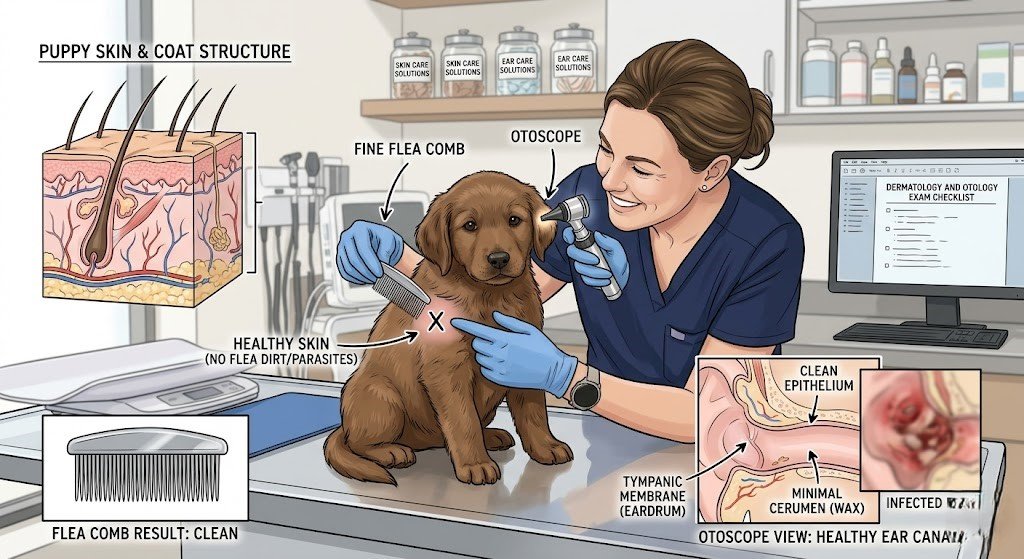
A microchip—about the size of a grain of rice—is safely implanted under the skin between the shoulder blades. It provides permanent, tamper-proof identification linked to your contact details in a national registry.
Spay and Neuter Protocols
According to current American Animal Hospital Association (AAHA) guidelines, most cats should be spayed or neutered prior to 5 months of age to stop territorial marking and eliminate cancer risks. For dogs, timing depends on breed size:
- Small-to-Medium Breeds: Typically neutered between 6 to 9 months.
- Large & Giant Breeds: Often delayed until 12 to 18 months to allow joint cartilage and growth plates to close under hormone influence.

Behavioral Socialization and Stress-Free Handling
Preventive puppy & kitten veterinary care extends to behavioral health. The primary socialization period occurs between 3 and 14 weeks for puppies and 2 and 9 weeks for kittens.
- Carrier Acclimation for Kittens: Keep pet carriers open at home with soft bedding and treats so traveling to the clinic is not associated solely with stress.
- Positive Reinforcement Visits: Bring high-value treats to routine exam visits to countercondition veterinary fear.
- Desensitization: Practice touching paws, checking ears, and lifting lips daily at home to make future clinical exams easy and calm.
Conclusion
Navigating the first year of life with a new pet requires dedication, routine medical checkups, and informed decision-making. By committing to a complete puppy & kitten veterinary care strategy—covering core vaccinations, deworming schedules, tailored nutrition, and early behavioral desensitization—you shield your young companion from preventable illnesses and give them the best possible start in life. Speak with your local veterinarian today to draft a personalized preventive health calendar tailored specifically to your new pet’s unique needs!
Frequently Asked Questions (FAQs)
What age should a puppy or kitten go for their first vet visit?
A puppy or kitten should have their first veterinary appointment within the first 7 days of adoption. If they are very young, the initial vaccine series usually begins between 6 and 8 weeks of age.
Why do puppies and kittens need vaccine boosters every 3 to 4 weeks?
Young pets inherit maternal antibodies from their mother’s milk, which temporarily protect them from infectious diseases but also block vaccines from building long-lasting immunity. Booster shots given every 3 to 4 weeks up to 16 weeks ensure that once maternal antibodies fade, the vaccine takes full effect.
How often do young pets need deworming treatment?
Most puppies and kittens require deworming doses every 2 to 4 weeks until they are 12 weeks old. Afterwards, they transition to continuous monthly flea, tick, and heartworm preventives that contain internal parasite protection.
When is the ideal time to spay or neuter my puppy or kitten?
Kittens are generally spayed or neutered before 5 months of age. For puppies, timing ranges from 6 months for smaller breeds up to 12–18 months for large or giant breeds to support healthy skeletal growth.