

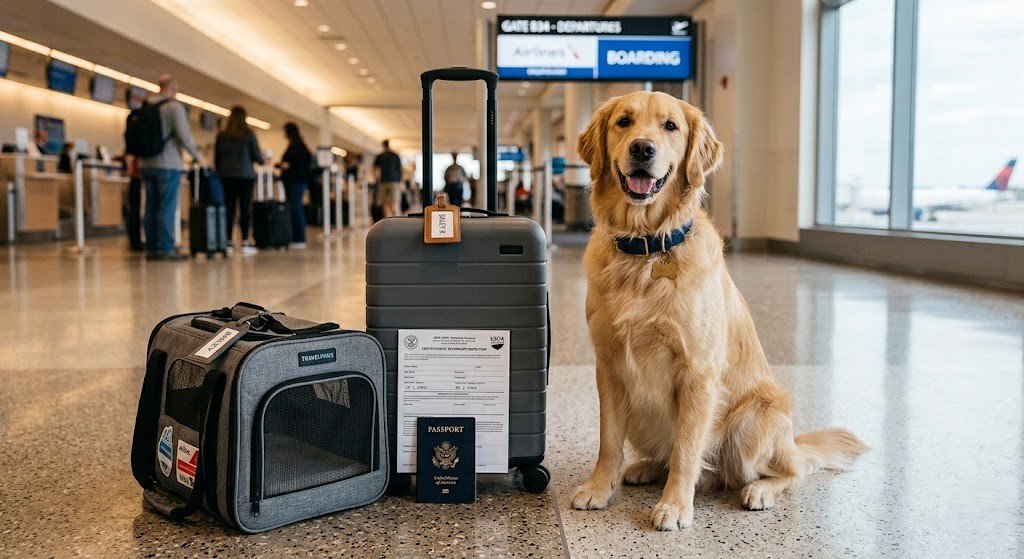
Navigating airline travel with a cat or dog requires careful planning, and few requirements cause as much stress as obtaining a pet health certificate for travel. Officially known as a Certificate of Veterinary Inspection (CVI), this document verifies that your companion animal is fit to fly, up to date on required vaccinations, and free from contagious diseases that could pose a threat to public health or other animals.
Whether you are booking a short domestic flight or crossing international borders, understanding the specific guidelines for securing a valid pet health certificate for travel can mean the difference between a seamless departure and being denied at the boarding gate.
Key Takeaways
- Timing is Critical: Most domestic airlines require a pet health certificate for travel issued within 10 days of departure.
- USDA Accreditation Required: For international flights, the health certificate must be completed by a USDA-accredited veterinarian and often requires official USDA APHIS endorsement.
- Airline Rules Differ from Government Rules: Having an approved health certificate does not override carrier-specific restrictions on crate dimensions, breed allowances, or cabin temperature limits.
- Microchips and Vaccinations First: ISO-compliant microchips and up-to-date rabies vaccinations must be administered before or during the final health check.
What Is a Pet Health Certificate for Travel?
A pet health certificate for travel is a legally binding document signed by a licensed veterinarian after a physical examination. It confirms that your animal shows no clinical signs of infectious diseases and meets all sanitary conditions mandated by your departure location, transit hubs, and final destination.
┌────────────────────────────────────────────────────────────────────────┐
│                        PET TRAVEL DOCUMENTATION CHECKLIST             │
├──────────────────────────────┬─────────────────────────────────────────┤
│ Domestic Travel (US State)   │ Standard CVI (within 10 days of flight) │
│ International Travel         │ USDA-Endorsed International CVI         │
│ High-Risk Rabies Regions     │ Rabies Titer Test + CDC Import Permit   │
│ Airline Compliance           │ Carrier Form + Approved Pet Container   │
└──────────────────────────────┴─────────────────────────────────────────┘
Depending on where you are flying, the certificate documents vital health information, including:
- Current rabies vaccination history (including product brand, lot number, and expiration date).
- Microchip identification number (ISO 11784/11785 standard).
- Recent diagnostic test results (e.g., heartworm screenings or rabies antibody titer tests).
- Confirmation of internal and external parasite treatments.
For more detailed tips on managing your pet’s overall wellness prior to high-stress events, read our guide on [Internal Link: Insert relevant internal URL here with anchor text: preparing pets for stress-free travel].
Domestic vs. International Travel Requirements
The rules for obtaining a pet health certificate for travel vary significantly depending on your flight path.
1. Domestic Flights (State-to-State)
For flights within the United States, most major airlines require a standard CVI issued by a state-licensed veterinarian within 10 days of travel. Individual destination states set their own import standards, so checking state department of agriculture regulations before booking is essential.
2. International Flights
Traveling abroad requires an International Health Certificate.
- USDA Accreditation: Your paperwork must be completed by a veterinarian certified under the National Veterinary Accreditation Program (NVAP).
- USDA APHIS Endorsement: After your accredited vet signs the certificate, it often needs to be submitted electronically via the Veterinary Export Health Certification System (VEHCS) to the USDA for official endorsement.
- Destination Timelines: Certain countries (such as Japan, Australia, or Hawaii) require a rabies titer test and up to six months of lead time prior to entry.
For authoritative state and foreign country requirements, refer directly to the official [External Link: Insert high-authority external URL here with anchor text: USDA APHIS Pet Travel Portal].
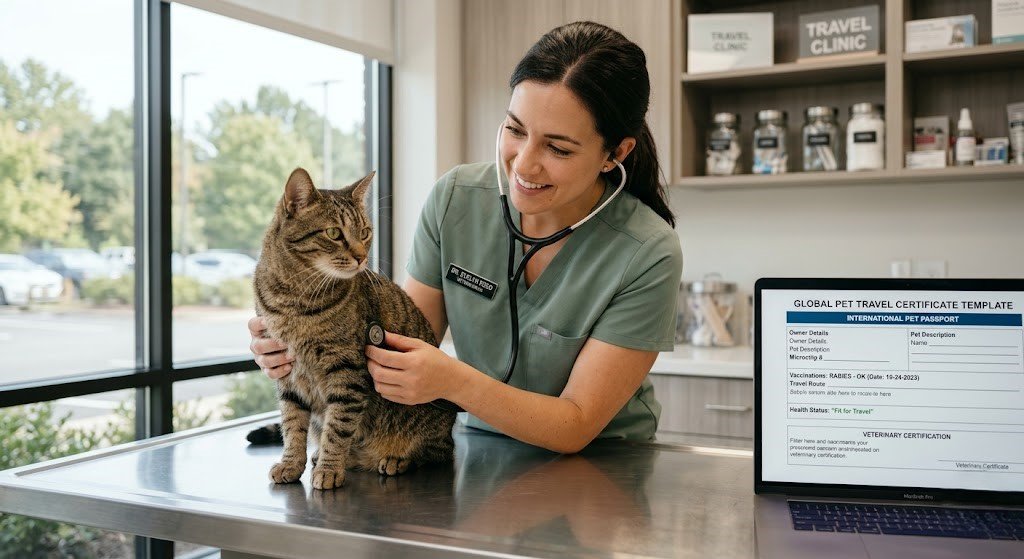
Step-by-Step Guide: How to Get a Pet Health Certificate for Travel
To ensure you do not run into unexpected delays at airport check-in, follow this structured timeline when securing your pet health certificate for travel.
Step 1: Check Entry Rules ──► Step 2: Book Accredited Vet ──► Step 3: Exam & Paperwork ──► Step 4: USDA Endorsement ──► Step 5: Airline Verification
  (6-8 Weeks Ahead)             (3-4 Weeks Ahead)             (7-10 Days Ahead)           (3-5 Days Ahead)            (24 Hours Ahead)
Step 1: Research Destination and Airline Policies (6–8 Weeks Out)
Start early. Confirm specific entry guidelines for your destination country or state, and verify your chosen airline’s pet policy regarding cabin allowances, carrier sizes, and temperature restrictions.
Step 2: Book an Appointment with an Accredited Vet (3–4 Weeks Out)
Confirm that your veterinary clinic has a USDA-accredited practitioner on staff if traveling internationally. Mention your travel destination and exact flight date when scheduling.
Step 3: Complete Required Health Checks and Vaccinations (7–10 Days Out)
During the health exam, your veterinarian will evaluate your pet’s physical condition, verify microchip scanning, ensure rabies boosters are current, and sign the pet health certificate for travel.
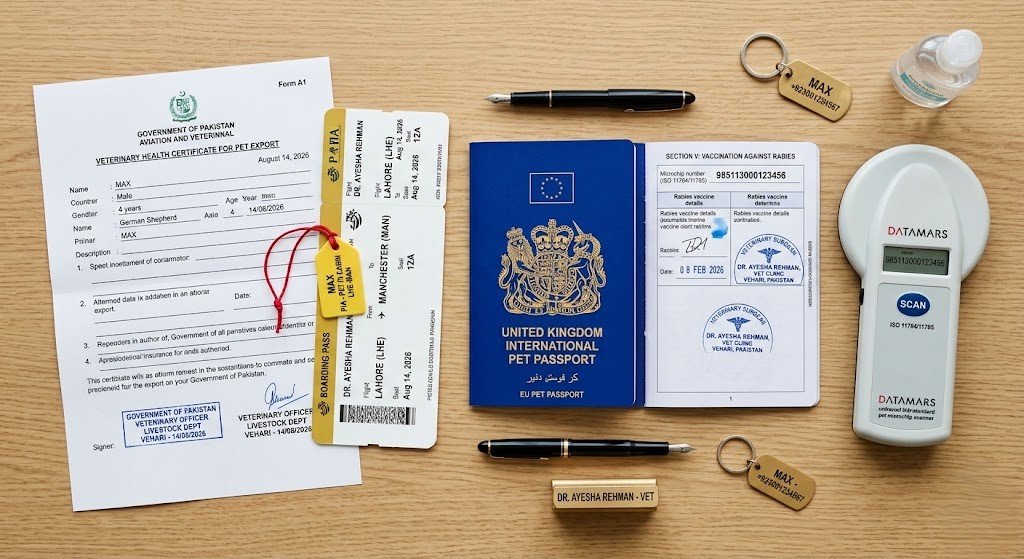
Step 4: Secure Official Endorsement (If Required)
If your flight route requires federal endorsement, your vet will upload the certificate to VEHCS for digital signing by a USDA veterinary medical officer. Ensure you receive the hard copy with official embossed or electronic stamps before heading to the airport.
Common Mistakes That Delay Pet Travel Approval
Even small administrative oversights can result in denied entry or mandatory animal quarantine. Avoid these frequent errors when obtaining your pet health certificate for travel:
- Incorrect Order of Microchipping and Rabies Shots: Most international authorities require the microchip to be implanted before or on the same day as the final rabies vaccination. Vaccines given prior to microchipping may be ruled invalid.
- Missing the Travel Window: Standard domestic certificates expire 10 to 30 days after issuance, while airline policies often demand an exam within 10 days of the flight date.
- Assuming Airline Rules Match Government Rules: An approved government health certificate permits entry into a country, but individual airlines reserve the right to restrict pets based on extreme weather forecasts or breed-specific respiratory risks.
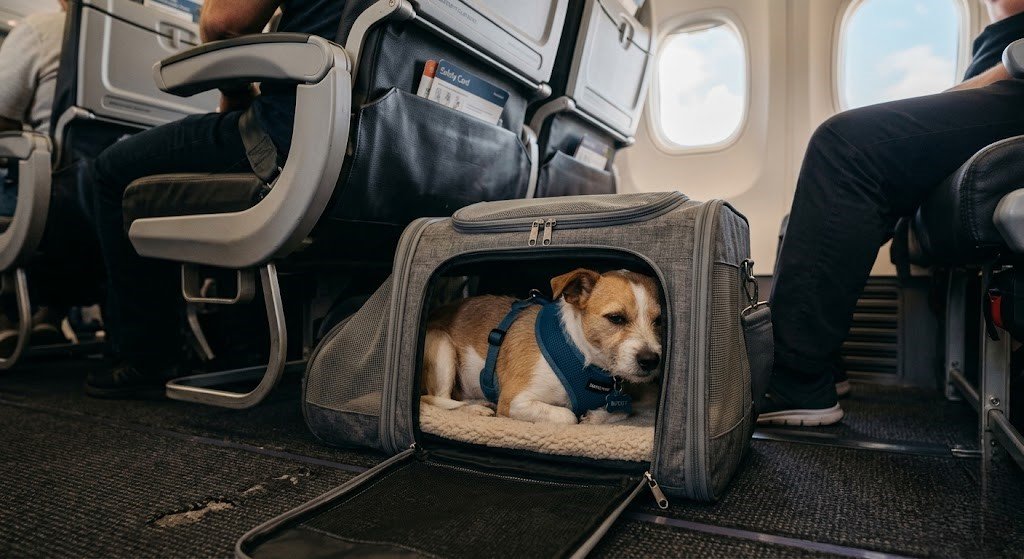
Conclusion
Securing a pet health certificate for travel requires diligence, accurate timing, and close coordination with an accredited veterinarian. By verifying your destination’s requirements weeks in advance, keeping vaccinations synchronized with microchip records, and confirming your airline’s carrier policies, you can enjoy a smooth journey with your four-legged family member.
Frequently Asked Questions (FAQs)
How long is a pet health certificate for travel valid?
For most domestic flights, a pet health certificate for travel remains valid for 10 days from the date of examination for airline boarding purposes. Some states allow certificates up to 30 days old for ground travel, but airlines strictly adhere to their 10-day window.
How much does a pet health certificate for travel cost?
The cost generally ranges between $100 and $300 for standard domestic exams and documentation. International certificates requiring USDA endorsement, diagnostic bloodwork, or parasite treatments can range from $250 to $600+, plus federal USDA endorsement fees.
Can any veterinarian issue a pet health certificate for travel?
Any state-licensed veterinarian can issue a domestic CVI. However, only a USDA-accredited veterinarian can issue an international health certificate that qualifies for official government endorsement.
What happens if my pet’s health certificate expires before my return flight?
If your round trip exceeds the validity period of your original certificate (typically 10 to 30 days), you must schedule an exam with a licensed veterinarian at your destination to obtain a new pet health certificate for travel before your return flight.