

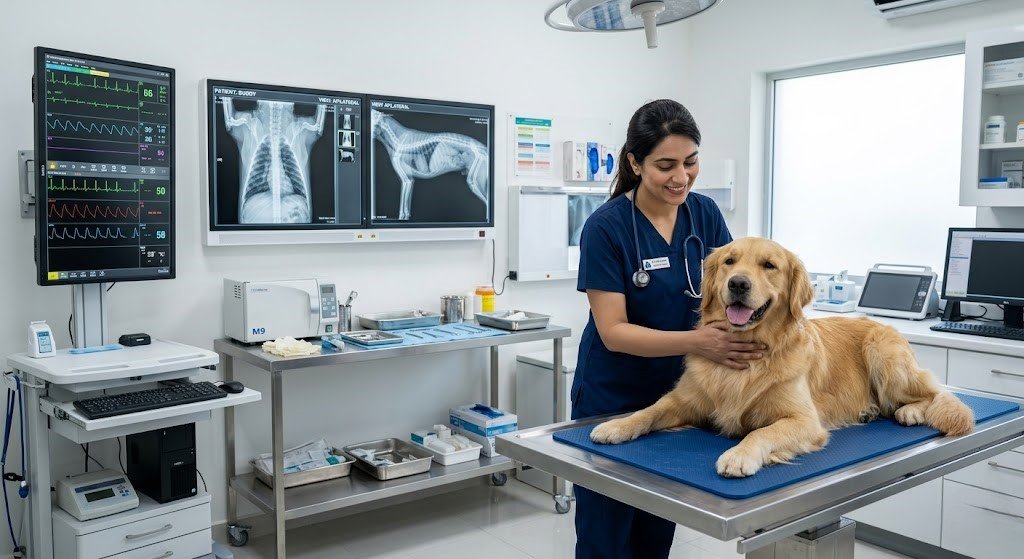
When your pet faces a complex health challenge, having access to comprehensive medical evaluation, precise diagnostics, and skilled surgical intervention makes all the difference in their recovery and quality of life. Modern veterinary care relies on an integrated approach where internal medicine, high-resolution imaging, and advanced surgical techniques work together to pinpoint underlying issues early and deliver effective treatment. At PettyCore, we prioritize evidence-based protocols to ensure your pet receives accurate diagnoses, minimal surgical risk, and compassionate post-operative care.
Key Takeaways
- Integrated Care Model: Modern care combines advanced lab testing, digital imaging, and specialized surgical procedures under one roof to ensure seamless treatment.
- Early Diagnostic Precision: Pre-surgical diagnostics—including CBC, chemistry panels, and ultrasound—minimize anesthesia risks and identify hidden health conditions early.
- Comprehensive Surgical Solutions: From routine spay/neuter procedures to complex soft-tissue and orthopedic interventions, specialized surgical protocols prioritize rapid recovery and pain management.
- Proactive Recovery Plans: Post-operative monitoring, structured wound management, and tailored rehabilitation significantly improve long-term outcomes.
The Foundation of Modern Veterinary Medical Care
Veterinary internal medicine focuses on diagnosing and treating systemic diseases without immediately resorting to invasive procedures. Companion animals frequently present with subtle clinical signs—such as lethargy, changes in appetite, or weight loss—that require thorough clinical investigation.
Veterinarians evaluate multiple organ systems to address complex conditions, including:
- Endocrine Disorders: Conditions like diabetes mellitus, Cushing’s disease, and hypothyroidism requiring long-term hormonal management.
- Gastrointestinal & Renal Diseases: Chronic enteropathies, kidney disease, and liver dysfunction that depend on custom therapeutic diet plans and targeted pharmaceuticals.
- Cardiopulmonary Care: Managing congestive heart failure, feline asthma, and chronic bronchitis through medication and continuous cardiac monitoring.
By establishing a baseline through routine physical exams and wellness screening, medical teams can detect subtle pathological shifts before they progress into acute emergencies.
Diagnostic Capabilities: Pinpointing the Root Cause
Accurate treatment begins with reliable diagnostic data. Advanced veterinary diagnostics allow practitioners to look beneath the surface, removing guesswork from complex clinical cases.
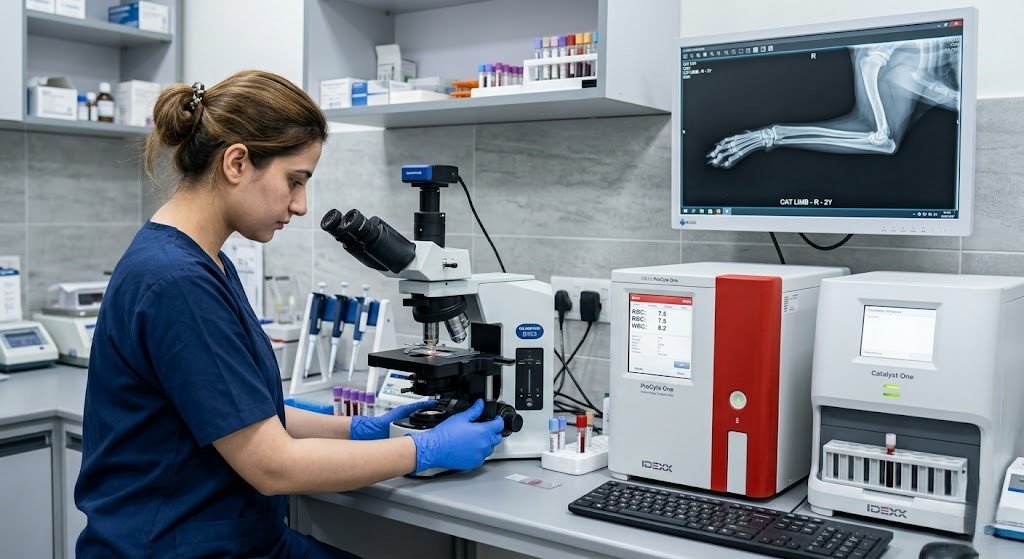
In-House Laboratory Testing
Real-time laboratory results are essential when evaluating critically ill patients or preparing animals for surgery. Standard diagnostic panels include:
- Hematology (CBC): Evaluates red blood cells, white blood cells, and platelets to identify anemia, hidden infection, or systemic inflammation.
- Clinical Chemistry: Analyzes organ function markers, electrolytes, and blood glucose levels to evaluate liver, kidney, and pancreatic health.
- Cytology & Urinalysis: Provides direct microscopic evaluation of body fluids and cell aspirates to differentiate benign masses from malignant tumors.
Diagnostic Imaging
When internal structures require visual evaluation, diagnostic imaging provides non-invasive clarity. Digital X-rays offer immediate high-definition views of bone structures and thoracic cavities, while abdominal ultrasonography provides detailed cross-sectional views of soft tissue organs in real time.
For deeper insights on maintaining your pet’s routine wellness before complex symptoms arise, explore our guide on [Internal Link: Insert relevant internal URL here with anchor text].
Surgical Intervention: Precision and Safety
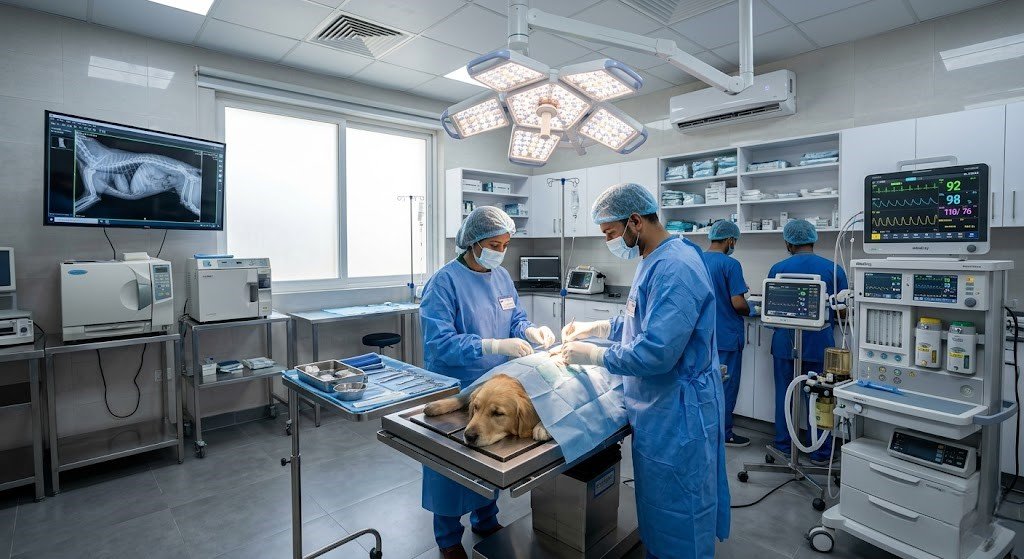
Surgical procedures in veterinary medicine range from preventive operations to emergency lifesaving interventions. Every surgical patient undergoes tailored pre-anesthetic screening to assess cardiovascular and metabolic stability.
Routine vs. Advanced Surgical Procedures
| Surgical Category | Common Procedures | Primary Objective |
| Preventive Surgery | Spay, Neuter, Prophylactic Gastropexy | Prevent reproductive cancers, behavioral issues, and life-threatening bloat. |
| Soft Tissue Surgery | Foreign body removal, mass excision, wound repair | Address internal organ pathology, remove toxic blockages, or repair traumatic injuries. |
| Orthopedic Surgery | CCL repair (TPLO), fracture stabilization, patellar luxation | Restore joint stability, relieve pain, and return mobility to affected limbs. |
| Emergency Surgery | GDV correction, splenectomy, emergency C-section | Stabilize acute, life-threatening internal crisis. |
Patient Safety & Anesthesia Monitoring
Patient safety during veterinary medical, surgery & diagnostics depends heavily on individualized anesthesia protocols. Dedicated surgical nurses monitor vital parameters continuously—including pulse oximetry, electrocardiography (ECG), end-tidal CO2, blood pressure, and core body temperature—from induction through extubation.
For detailed clinical benchmarks on veterinary anesthesia protocols and animal welfare guidelines, consult the official resources provided by the [External Link: Insert high-authority external URL here with anchor text].
Post-Operative Care and Recovery Management
Surgery represents only one part of the healing process; structured post-operative management is essential to prevent surgical site infections and facilitate tissue repair.
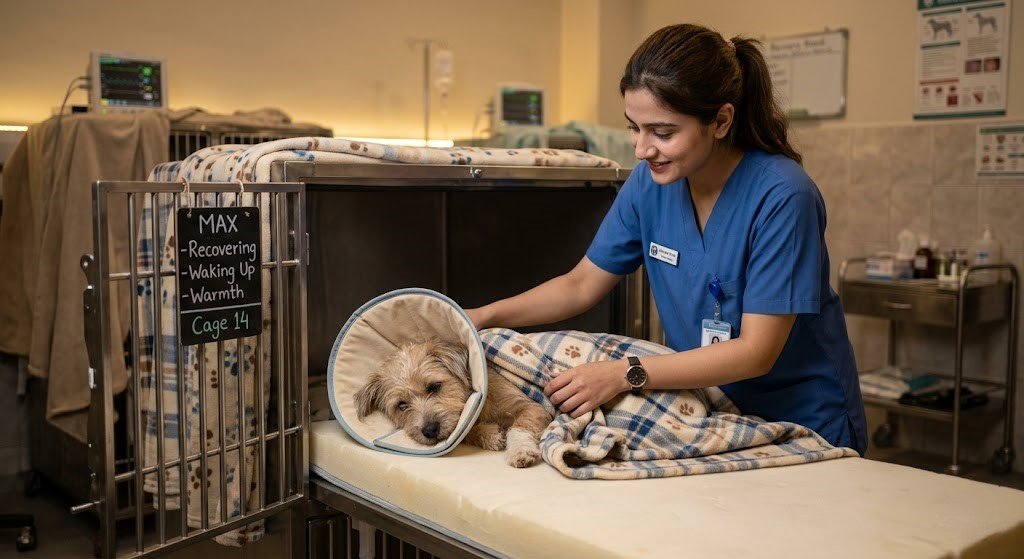
- Multi-Modal Pain Management: Utilizing a combination of NSAIDs, opioids, and local nerve blocks minimizes discomfort while lowering required pharmaceutical dosages.
- Surgical Site Integrity: Implementing protective collars, anti-microbial barrier care, and strict activity restriction prevents wound dehiscence.
- Rehabilitation & Mobility Support: Introducing controlled physical therapy and hydrotherapy accelerates recovery following complex orthopedic or neurological interventions.
Frequently Asked Questions
What pre-surgical diagnostics are required before my pet undergoes surgery?
Most veterinarians require pre-anesthetic blood work (CBC and chemistry panel) and a physical exam. Senior pets or high-risk patients may also undergo chest X-rays or electrocardiograms to verify organ function before administering anesthesia.
How long does recovery take after a soft tissue or orthopedic veterinary surgery?
Soft tissue recoveries typically require 10 to 14 days of restricted activity and wound care. Major orthopedic surgeries, such as TPLO or fracture repairs, often require 8 to 12 weeks of strict confinement and gradual rehabilitation.
Why are diagnostic imaging tools like ultrasound and digital X-rays necessary?
Diagnostic imaging allows veterinarians to evaluate internal organ structures, identify hidden tumors, detect foreign body obstructions, and examine bone fractures without invasive surgery.
Providing exceptional care requires a cohesive approach that balances internal medicine, advanced diagnostics, and surgical skill. By combining pre-anesthetic safety protocols, state-of-the-art diagnostic technology, and dedicated post-operative care, veterinary professionals ensure your pet enjoys a healthy, active, and comfortable life.