

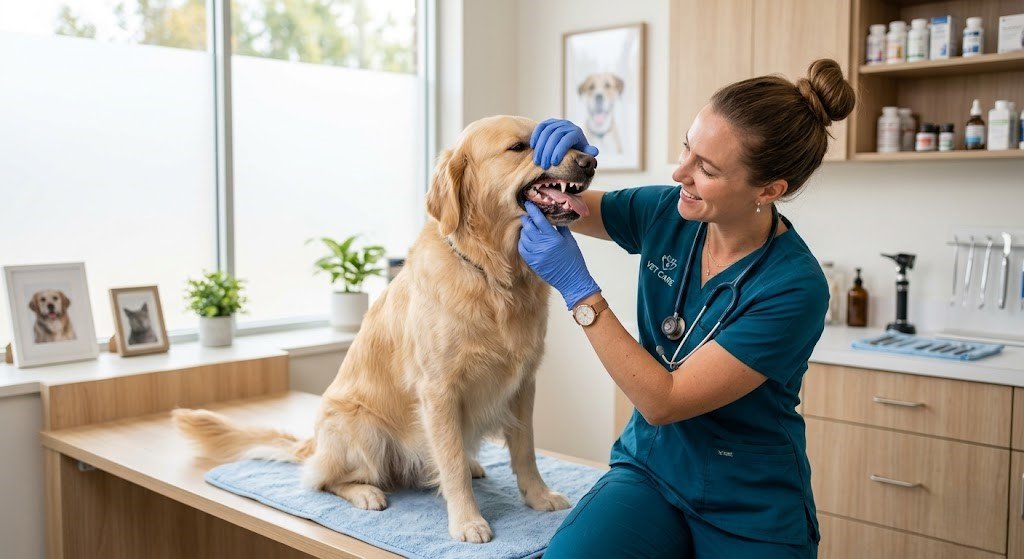
Did you know that by age three, over 80% of dogs and 70% of cats show active signs of periodontal disease? Oral health is often one of the most overlooked aspects of pet care, yet it plays a foundational role in your companion’s longevity and overall well-being.
A professional veterinary pet dental cleaning goes far beyond freshening bad breath; it prevents hidden bacterial infections from entering the bloodstream and affecting vital organs like the heart, liver, and kidneys. At PettyCore, we believe proactive oral care is essential to giving your pet a comfortable, pain-free life.
Key Takeaways
- Essential Preventive Care: Regular professional cleanings remove stubborn tartar and subgingival (below the gumline) plaque that home brushing cannot reach.
- Anesthesia is Necessary: Safe, general anesthesia allows for complete tooth-by-tooth examinations, dental X-rays, and pain-free subgingival scaling.
- Early Detection Saves Teeth: Annual dental exams help catch conditions like root abscesses, tooth resorptive lesions, and early gum recession before they require dental extractions.
- Home Maintenance is Vital: Daily brushing with pet-safe toothpaste significantly slows down plaque re-accumulation between professional visits.
Why Professional Veterinary Pet Dental Cleaning Matters
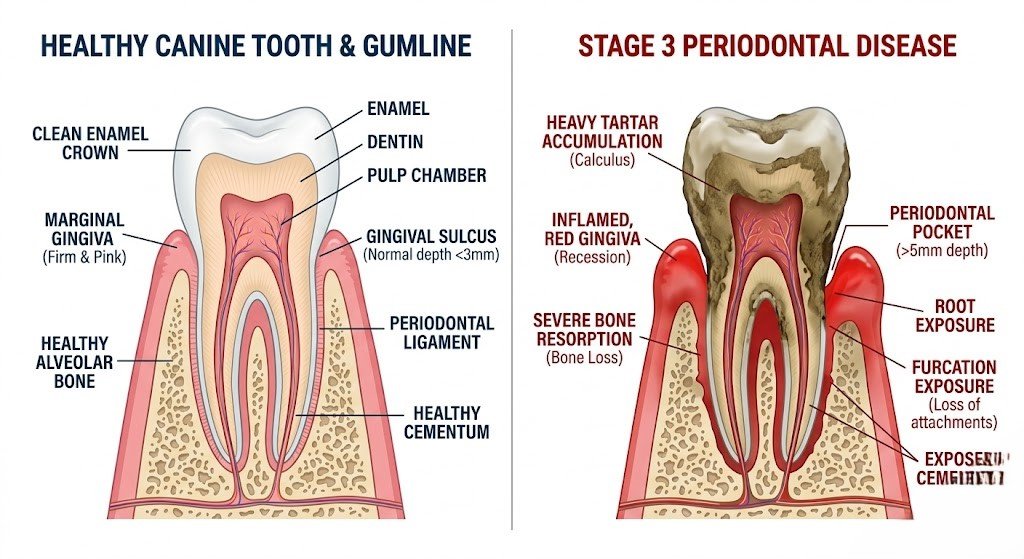
Plaque forms naturally on your pet’s teeth within six hours after eating. If left unaddressed, plaque combines with minerals in saliva to harden into brown or yellow calculus (tartar). Once tartar accumulates, simple brushing will no longer remove it.
Without professional intervention, tartar creeps beneath the gumline, harboring harmful bacteria that trigger inflammation (gingivitis) and eventually destroy the underlying bone structures supporting the teeth (periodontal disease).
[Internal Link: Learn more about early signs of illness in pets with PettyCore’s Pet Wellness Guide]
Signs Your Pet Needs a Dental Assessment
If you observe any of the following warning signs, it is time to schedule a full clinical evaluation:
- Persistent severe halitosis (bad breath)
- Red, swollen, or bleeding gums
- Visible yellow-brown crust along the gumline
- Dropping food, chewing on one side, or difficulty eating hard kibble
- Excessive drooling or pawing at the mouth
- Loose, fractured, or discolored teeth
What Happens During a Veterinary Pet Dental Cleaning Procedure?
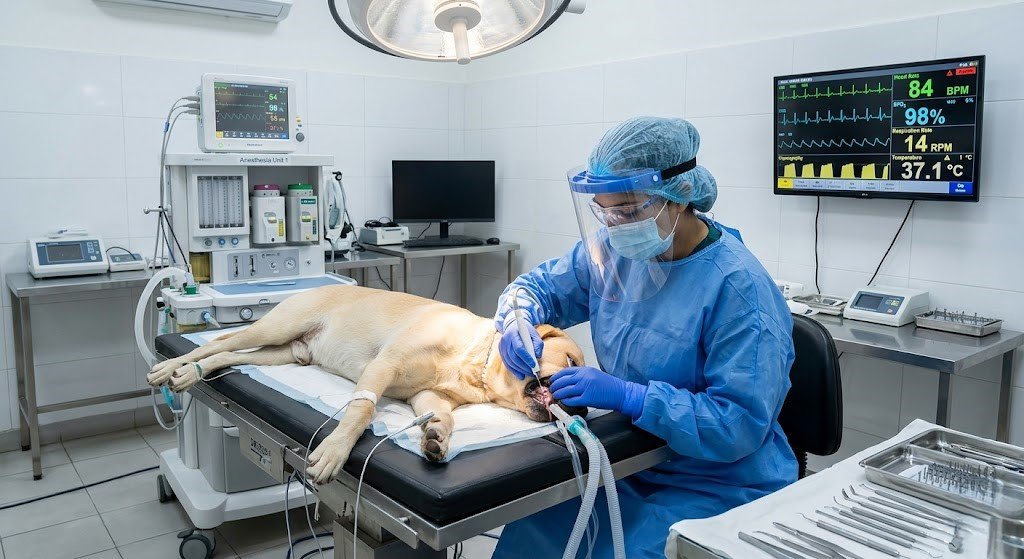
A comprehensive veterinary dental procedure—often called a Comprehensive Oral Health Assessment and Treatment (COHAT)—is a structured medical process.
Pre-Procedure Bloodwork ➔ Safe Anesthesia ➔ Intraoral Dental X-Rays ➔ Ultrasonic Scaling & Polishing ➔ Periodontal Probing
1. Pre-Anesthetic Screening
Before administer any sedatives, your veterinarian conducts a physical examination and comprehensive pre-anesthetic blood panel. This ensures your pet’s liver, kidneys, and heart are healthy enough to metabolize anesthesia safely.
2. Anesthesia & Vital Monitoring
Unlike humans, pets will not hold still or keep their mouths open for sharp instruments. General anesthesia with intubation is required to protect their airway from fluids and bacteria. Trained veterinary technicians monitor heart rate, blood pressure, oxygen saturation, and body temperature throughout the procedure.
3. Full Intraoral Radiographs (Dental X-Rays)
Up to 60% of a tooth’s structure sits hidden beneath the gumline. Intraoral X-rays allow veterinarians to identify root abscesses, bone destruction, internal tooth resorption, and jaw fractures that are completely invisible to the naked eye.
4. Ultrasonic Scaling & Subgingival Cleaning
Using specialized hand and ultrasonic scalers, plaque and tartar are carefully scraped from both above and below the gumline. Subgingival cleaning is the single most crucial step in arresting periodontal disease.
5. Polishing & Periodontal Probing
Scaling creates microscopic scratches on the tooth enamel. Polishing smooths these surfaces using fine-grit prophy paste, making it harder for new bacteria to adhere. Finally, a periodontal probe measures the depth of pockets around every individual tooth.
Why “Anesthesia-Free” Dental Cleanings Are Unsafe
“Anesthesia-free” or cosmetic dental scaling services have grown popular, but veterinary organizations strongly discourage them.
| Feature | Veterinary Anesthetized Cleaning | Non-Anesthetic Cosmetic Scraping |
| Cleaning Below Gumline | Yes — Removes deep bacteria | No — Cosmetic surface scaling only |
| Dental X-Rays | Yes — Evaluates bone & root health | No — Impossible on conscious animals |
| Airway Protection | Yes — Endotracheal tube prevents aspiration | No — High risk of inhaling bacteria/water |
| Pain & Stress Control | Yes — Pet sleeps peacefully | No — High physical restraint & distress |
| Enamel Polishing | Yes — Leaves smooth, bacteria-resistant enamel | No — Leaves scraped enamel prone to rapid decay |
Cosmetic scraping provides a false sense of security by whitening the surface while allowing active periodontal disease to flourish underground.
Effective At-Home Dental Care Routines
Professional cleanings work best when supported by a consistent home care routine. Maintaining your pet’s mouth between veterinary visits prevents rapid plaque accumulation.
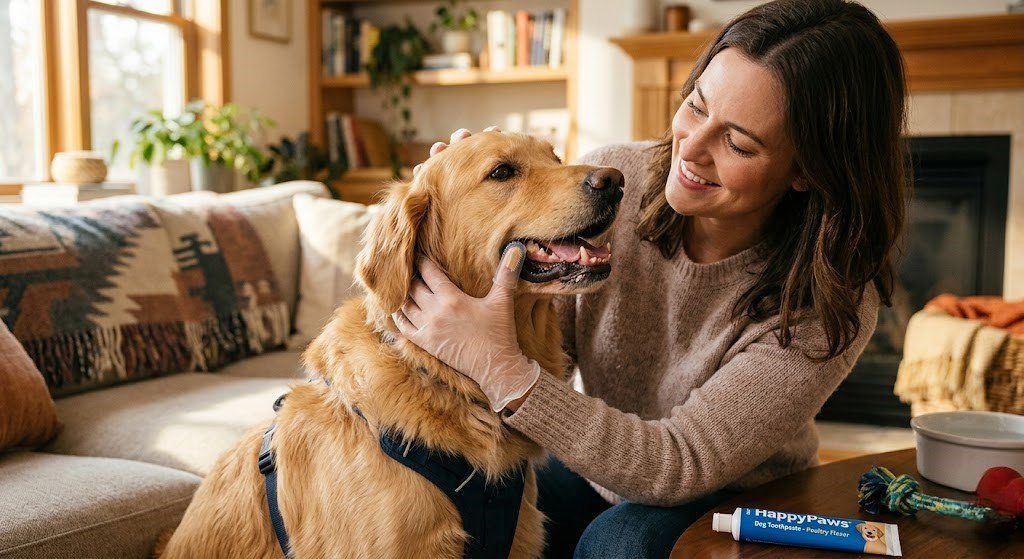
- Daily Tooth Brushing: Use a soft-bristled brush or finger toothbrush angled at 45 degrees toward the gumline. Focus on the outer cheek-facing surfaces.
- Use Enzymatic Pet Toothpaste: Never use human toothpaste, as ingredients like xylitol and fluoride are toxic to pets when swallowed. Enzymatic pet pastes break down plaque naturally and come in appealing flavors like poultry or beef.
- VOHC-Approved Dental Products: Look for products carrying the Veterinary Oral Health Council (VOHC) seal of acceptance. Approved options include dental chews, specific prescription diets, and water additives that scientifically prove plaque reduction.
- Avoid Unsafe Chews: Hard objects such as natural bones, antlers, cow hooves, and nylon chews frequently cause painful tooth fractures that require surgical removal. A good rule of thumb: if you cannot bend or flex the item with your hands, it is too hard for your pet’s teeth.
Conclusion
Investing in routine veterinary pet dental cleaning is one of the single most effective decisions you can make for your companion’s long-term vitality. By combining professional oral assessments, full dental X-rays, and subgingival scaling under anesthesia with a dedicated daily brushing routine at home, you protect your pet from chronic pain, tooth loss, and systemic health complications.
Schedule an oral evaluation with your primary veterinarian today to get ahead of hidden dental disease before it takes a toll on your pet’s health.
Frequently Asked Questions (FAQs)
How often does my pet need a veterinary pet dental cleaning?
Most dogs and cats benefit from a professional dental cleaning once every 12 to 24 months. However, small breeds, flat-faced (brachycephalic) pets, and animals prone to severe crowding may require cleanings every 6 to 12 months.
Is anesthesia safe for older pets receiving a dental cleaning?
Age itself is not a disease. With thorough pre-anesthetic blood screening, chest X-rays, and individualized anesthesia protocols, senior pets can safely undergo dental procedures. In fact, older pets often experience the greatest relief after diseased teeth are treated or extracted.
How long does recovery take after a pet dental procedure?
Most pets recover quickly and go home the same afternoon. Mild grogginess for 12–24 hours is normal. If extractions were performed, your veterinarian may prescribe pain medication and recommend soft food for 10–14 days while the surgical sites heal.