

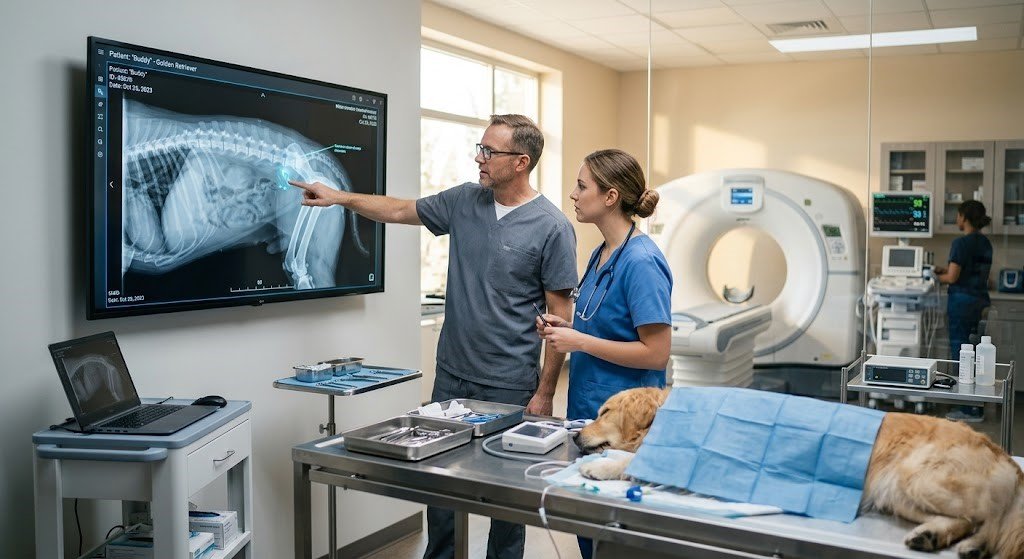
When our pets are unwell, they cannot tell us where it hurts. Veterinary professionals rely on non-invasive technologies to see beneath the surface and pinpoint health issues accurately. Digital Radiography & Pet Diagnostic Imaging has transformed veterinary medicine by offering instant, ultra-clear imaging that reduces stress for animals and provides clear answers for pet parents.
At PettyCore, modern diagnostic technology helps deliver rapid, precise care when every minute counts. Whether investigating a sudden limp, evaluating chronic joint discomfort, or detecting ingested objects, digital imaging ensures accurate diagnoses with lower radiation exposure and minimal discomfort.
Key Takeaways
- Speed & Precision: Digital X-rays produce high-resolution images in seconds, allowing immediate clinical evaluation.
- Lower Radiation Exposure: Digital sensors require significantly less radiation exposure than traditional film X-rays.
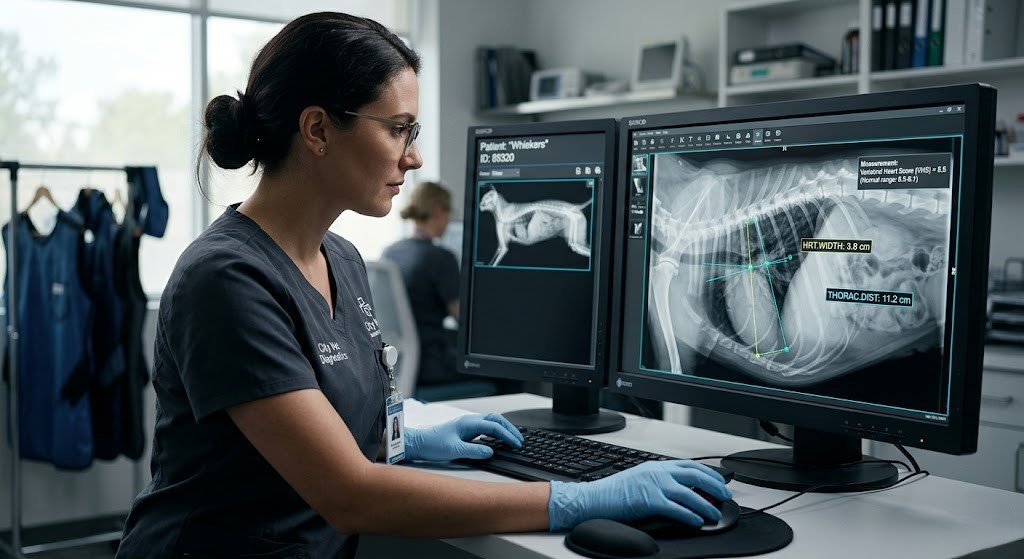
- Enhanced Diagnostic Tools: Veterinarians can zoom, adjust contrast, and measure internal structures digitally for enhanced accuracy.
- Stress-Free Handling: Faster image capture means pets spend less time restrained on exam tables.
- Seamless Sharing: Digital files allow effortless collaboration with veterinary specialists and radiologists worldwide.
What Is Digital Radiography in Veterinary Medicine?
Digital radiography (DR) is the modern replacement for traditional film-based X-rays. Instead of using chemical development plates that take time to process, digital radiography utilizes sensitive electronic sensors to capture detailed internal images instantly.
These images are displayed immediately on high-definition computer monitors. Veterinarians can zoom in on specific anatomical areas, adjust contrast levels, and measure structures precisely. This clarity helps detect subtle hairline fractures, early-stage bone degradation, or tiny foreign bodies that might easily be missed on traditional film.
Key Benefits of Digital Radiography & Pet Diagnostic Imaging
The transition to digital imaging brings major advantages to clinical practices and pet owners alike:
1. Rapid Diagnosis During Emergencies
In emergency situations, speed is critical. Digital radiography captures and processes images in seconds. Veterinarians can assess trauma, internal bleeding, or intestinal blockages right away and begin lifesaving interventions without delay.
2. Reduced Stress and Exposure for Pets
Traditional X-rays often require multiple retakes due to motion blur or exposure errors, increasing a pet’s exposure to radiation and prolonged restraint. Digital systems offer high exposure latitude, significantly reducing retakes and keeping radiation levels as low as reasonably achievable (ALARA).
3. Advanced Diagnostic Capabilities
Digital radiography allows veterinarians to inspect multiple body systems:
- Orthopedics: Bone fractures, joint dislocations, arthritis, and ligament tears.
- Cardiopulmonary: Heart enlargement, fluid in the lungs, asthma, and airway obstructions.
- Gastrointestinal: Ingested toys, coins, bones, or bowel obstructions.
- Dental Radiography: Tooth root abscesses, jawbone loss, and hidden oral lesions.
[External Link: Read the American Veterinary Medical Association (AVMA) guidelines on pet radiology safety]
How Digital Radiography Fits into Comprehensive Diagnostic Care
Digital X-rays serve as the cornerstone of Digital Radiography & Pet Diagnostic Imaging, but they are often paired with other complementary diagnostic tools to build a complete medical picture:
| Diagnostic Tool | Primary Function | Ideal Clinical Use |
| Digital Radiography (X-Ray) | Visualizes dense structures like bones, dense tissues, and gas pockets. | Fractures, joint disease, foreign objects, lung screening. |
| Veterinary Ultrasound | Evaluates real-time movement and internal structure of soft organs. | Abdominal organ checks, pregnancy monitoring, cardiac function. |
| CT & MRI Scans | Cross-sectional 3D imaging for detailed brain, spinal, and complex tissue analysis. | Neurological issues, complex surgical planning, deep tumors. |
By combining these diagnostic tools, care teams can pinpoint complex conditions early—giving treatments the best chance of success.
Preparing Your Pet for a Digital Diagnostic Scan
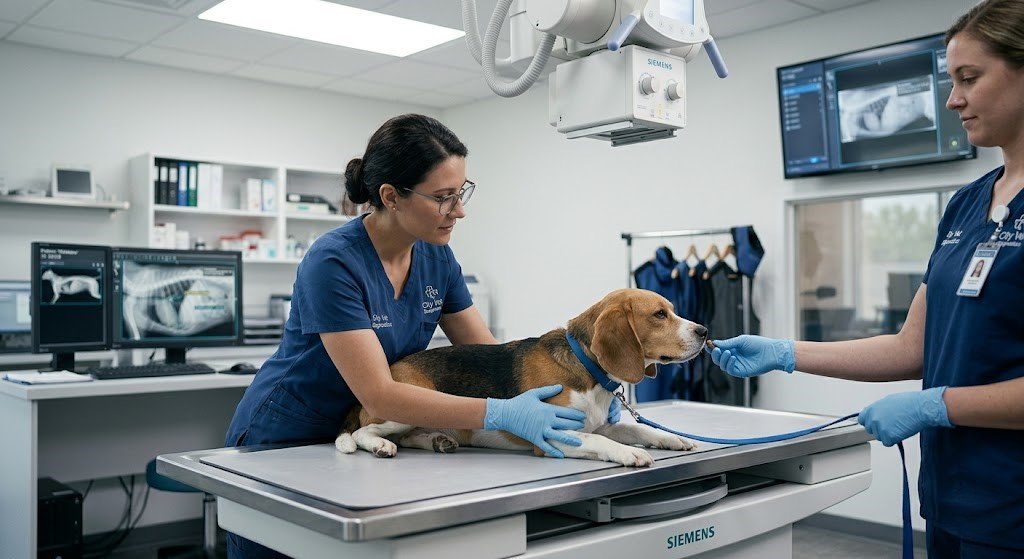
For most standard digital X-rays, minimal preparation is required. Because the process takes only a few seconds per view, most pets remain calm with gentle restraint from trained staff.
Here is what pet parents can expect during the procedure:
- Initial Physical Exam: A complete physical evaluation ensures your pet is stable for imaging.
- Gentle Positioning: Pets are gently placed on the padded X-ray table.
- Sedation (Only When Necessary): If a pet is in significant pain, anxious, or requires precise orthopedic positioning (such as hip dysplasia evaluations), a mild, reversible sedative may be administered to keep them comfortable.
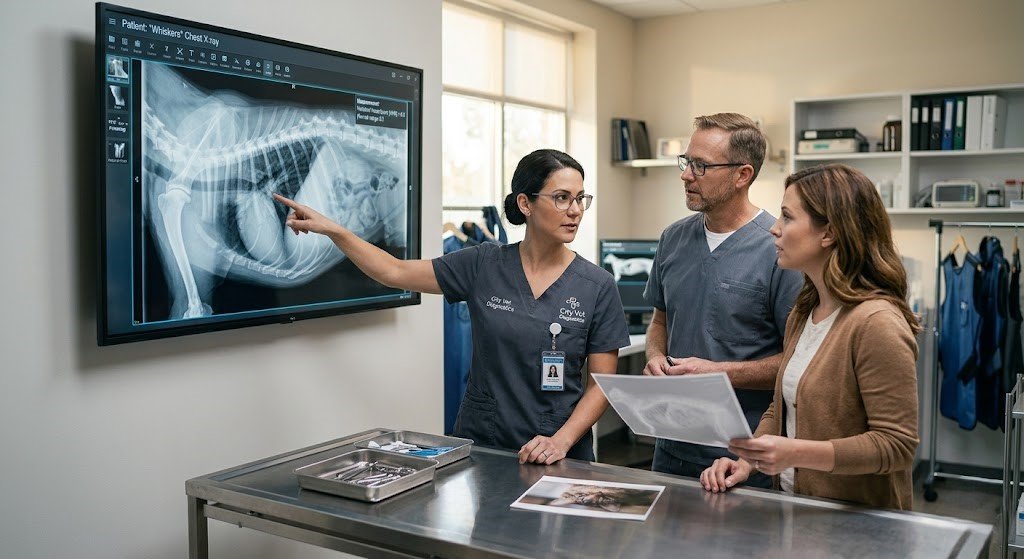
- Immediate Results & Consultation: The care team reviews the images immediately, walks you through the findings, and outlines recommended treatment steps.
The PettyCore Difference in Veterinary Diagnostics
Advanced medical technology works best alongside experienced clinical care. PettyCore combines state-of-the-art Digital Radiography & Pet Diagnostic Imaging equipment with gentle, stress-free handling practices.
Digital records mean your pet’s complete diagnostic history is safely stored and easily shared with board-certified radiologists or emergency clinics whenever required. Swift, accurate diagnostics give your pet the best pathway toward a healthy, active life.
Frequently Asked Questions
Is digital radiography safe for my pet?
Yes. Digital X-rays use significantly less radiation than traditional film X-rays. The exposure time is brief, making the procedure safe for pets of all ages and sizes.
Does my pet need to be sedated for a digital X-ray?
Not always. Many pets remain calm during the brief imaging process. Sedation is generally reserved for pets in pain, highly anxious animals, or specific orthopedic views that require absolute stillness.
How quickly will I get the results of my pet’s diagnostic imaging?
Because digital radiography processes images instantly, your veterinarian can review the results during your visit. If a second opinion from a board-certified veterinary radiologist is needed, digital files can be transmitted electronically for rapid expert review.
How much does digital pet diagnostic imaging cost?
Costs vary depending on the number of views required, body areas imaged, and whether sedation or specialist consultation is needed. Contact PettyCore directly for clear, transparent pricing tailored to your pet’s needs.