

When a pet experiences a sudden medical crisis, every second counts. Whether dealing with severe trauma, accidental poisoning, acute respiratory distress, or environmental exposure, knowing how to administer immediate, stabilization-focused pet emergency care and first aid can mean the difference between recovery and fatal complications.
While first aid is never a substitute for direct veterinary treatment, executing proper emergency stabilization techniques reduces shock, minimizes tissue damage, and keeps your pet safe while in transit to an emergency veterinary clinic. This complete reference guide outlines essential clinical protocols, vital sign baselines, step-by-step CPR instructions, and triage management every pet owner needs to master.
Key Takeaways: Vital Pet First-Aid Rules
- Prioritize Personal Safety First: Painful or frightened animals often bite or scratch defensively. Always muzzle dogs (unless they are vomiting or choking) and wrap cats in a thick blanket or towel before handling.
- Know Your Pet’s Vital Baselines: Normal heart rates range from 70–130 BPM in dogs and 140–220 BPM in cats. Normal body temperature for both species is 99.5°F to 102.5°F.
- Control Hemorrhage Immediately: Apply direct, continuous pressure to open wounds using sterile gauze or a clean cloth; never remove soaked bandages—layer additional padding on top.
- Avoid Human Medications: Common OTC painkillers such as Tylenol (acetaminophen), Ibuprofen, and Aleve are highly toxic to dogs and cats, leading to fatal renal or hepatic failure.
- Triage First, Transport Fast: Stabilize life-threatening conditions (airway, breathing, circulation) first, then transport the pet immediately to a 24/7 veterinary facility.
Understanding Pet Vital Signs & Triaging Emergencies
Before initiating pet emergency care and first aid, performing a quick physical assessment helps determine the severity of your animal’s condition.
+-------------------+----------------------------+----------------------------+
| Vital Parameter   | Normal Canine Baseline     | Normal Feline Baseline     |
+-------------------+----------------------------+----------------------------+
| Body Temperature  | 99.5°F - 102.5°F           | 99.5°F - 102.5°F           |
| Pulse / Heart Rate| 70 - 130 BPM (size varies) | 140 - 220 BPM              |
| Respiration Rate  | 15 - 30 breaths / min      | 20 - 30 breaths / min      |
| Gum Color         | Powder Pink & Moist        | Light Pink & Moist         |
| Capillary Refill  | Under 2 seconds            | Under 2 seconds            |
+-------------------+----------------------------+----------------------------+
Checking Capillary Refill Time (CRT) & Gum Color
Gently lift your pet’s upper lip to examine their gums:
- Bubblegum Pink: Healthy blood flow and oxygenation.
- Pale or White Gums: Indicates severe anemia, internal bleeding, or cardiovascular shock.
- Blue or Purple Gums (Cyanosis): Signals acute respiratory failure or airway obstruction.
- Bright Red Gums: Points to heatstroke, systemic toxicity, or early sepsis.
To check CRT, press your thumb firmly against the gum line for two seconds and release. The pink color should return in under 2 seconds. Delays longer than two seconds signal poor capillary perfusion and impending shock.
Step-by-Step Cardiopulmonary Resuscitation (CPR) for Pets
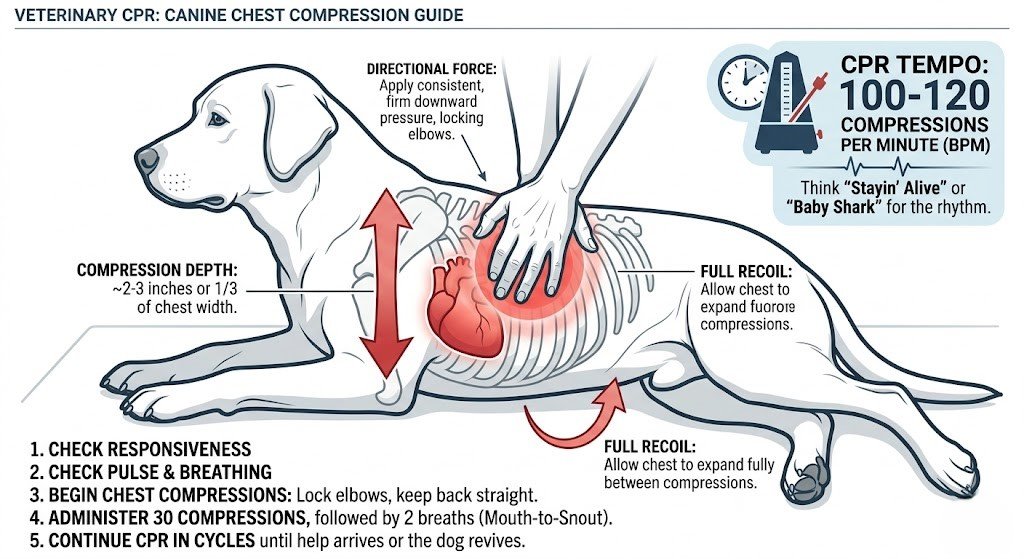
If your pet is unresponsive, lacks a palpable pulse along the inner femoral artery, and is not breathing, perform CPR immediately.
[Internal Link: Read our comprehensive guide on recognizing cardiac arrest in pets for further details]
1. Clear the Airway
Place the pet on their right side on a flat surface. Open the mouth, pull the tongue forward, and inspect for foreign objects. Sweep the back of the throat carefully with a finger only if an object is visibly dislodged.
2. Administer Rescue Breathing
Close the pet’s mouth tightly, holding the muzzle shut with your hands. Place your mouth over their nose (or nose and mouth for small breeds/cats) and blow gently until you see the chest expand. Administer 2 rescue breaths for every 30 chest compressions.
3. Perform Chest Compressions
- Medium to Large Dogs: Position hands over the widest portion of the ribcage. Compress 1.5 to 2 inches deep at a rate of 100 to 120 compressions per minute.
- Small Dogs & Cats: Compress the chest between your thumb and fingers or compress over the sternum at a rate of 100 to 120 compressions per minute.
Managing Acute Traumatic Injuries & Bleeding
Controlling severe hemorrhaging is a core pillar of pet emergency care and first aid.
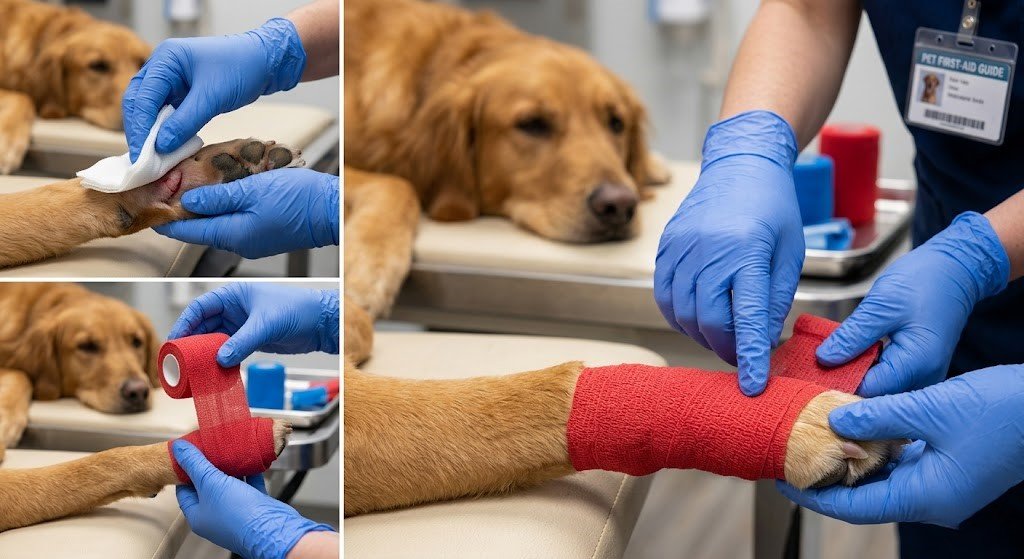
Direct Compression and Dressing
- Place a sterile gauze pad or clean cloth directly over the bleeding site.
- Apply firm, continuous pressure with your hand for at least 3 to 5 minutes.
- If blood soaks through, do not lift the bottom pad—doing so disrupts initial blood clot formation. Place additional sterile layers directly on top and reapply pressure.
- Secure with an elastic self-adhesive bandage (e.g., Vetwrap), ensuring you do not constrict circulation.
Stabilizing Suspected Fractures
If a limb appears deformed, swollen, or non-weight-bearing, keep the pet as immobile as possible. Avoid trying to set or realign broken bones. Transport small animals in a hard-sided carrier padded with folded towels; support larger animals on a rigid makeshift stretcher (such as a flat wooden board or taut blanket).
Toxin Exposure & Accidental Poisoning Protocols
Ingestion of toxic substances—including rodenticides, chocolate, lilies (highly fatal to cats), xylitol, or human medications—requires rapid triage.
[External Link: Consult the ASPCA Animal Poison Control Center resource for instant chemical safety data]
- Do NOT Induce Vomiting Unless Instructed: Inducing vomiting when a pet has swallowed corrosive chemicals, petroleum distillates, or sharp objects causes severe esophageal burns or aspiration pneumonia.
- Collect the Container/Sample: Secure any packaging, plant parts, or vomit samples to present to the emergency veterinary team upon arrival.
- Contact Specialists Immediately: Call your local emergency vet or national animal poison helplines right away.
Environmental Emergencies: Heatstroke & Hypothermia
Thermal distress quickly progresses to multiorgan failure if unaddressed.
Treating Heatstroke (Hyperthermia)
Signs include excessive panting, drooling, deep red gums, vomiting, and collapse.
- Immediately move the pet away from heat sources into an air-conditioned room or shade.
- Apply cool (not cold or icy) tap water to the belly, paws, inner thighs, and neck.
- Position a small fan nearby to facilitate evaporative cooling.
- Stop cooling once body temperature reaches 103.0°F to avoid hypothermic rebound, and transport the pet to a clinic immediately.

Essential Supplies for a Home Pet First-Aid Kit
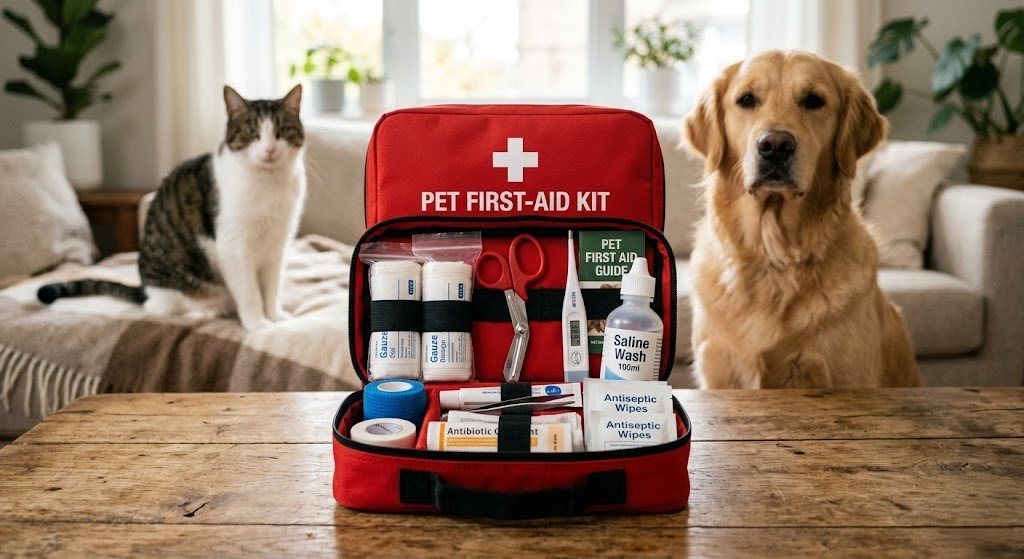
Every household should maintain a dedicated, portable emergency kit containing:
- Sterile gauze pads, rolled cotton bandages, and elastic wrap
- Blunt-ended trauma scissors and fine-tipped tweezers
- Antiseptic wipes and 0.9% sterile saline solution
- Digital rectal thermometer and water-soluble lubricant
- Muzzle or gauze roll for restraint
- Contact card with 24/7 emergency vet clinics and poison control numbers
Conclusion
Being prepared to administer immediate pet emergency care and first aid stabilizes your pet during vital moments, giving emergency veterinarians the best opportunity to treat severe conditions effectively. Familiarize yourself with normal vital signs, store your first-aid kit in an accessible location, and keep emergency contacts saved in your phone.
Frequently Asked Questions (FAQs)
What are the most common signs my pet needs emergency medical care?
Immediate emergency attention is required if your pet exhibits difficulty breathing, loss of consciousness, uncontrolled bleeding, severe lethargy, pale gums, sudden inability to walk, persistent vomiting, or known toxin ingestion.
Can I give my dog human pain medication during a first-aid situation?
No. Never give human pain medications like aspirin, ibuprofen, acetaminophen, or naproxen to dogs or cats. These drugs cause severe gastric ulceration, acute renal damage, and fatal liver failure. Pain management must always be prescribed by a veterinarian.
How do I perform the Heimlich maneuver on a choking pet?
If an object blocks the airway and cannot be gently swept out, perform abdominal thrusts. For medium to large standing dogs, wrap your arms around their abdomen behind the ribcage, form a fist, and apply firm upward/forward thrusts. For small dogs or cats, place them on their side or hold them against your chest and apply quick inward pressure just below the ribcage.
How do I safely transport an injured pet to the vet without causing further pain?
Always secure the animal’s head and limbs safely. Use a soft muzzle on non-choking dogs to prevent pain-induced biting. Transport small dogs and cats inside a secure, padded carrier. For larger dogs, utilize a rigid board, heavy blanket, or car cargo mat as a stretcher with assistance.