


Vaccinating your four-legged companion is one of the most effective ways to ensure a long, healthy life. Navigating core versus non-core vaccines, booster frequencies, and species-specific requirements can feel overwhelming for any pet parent. Following structured pet vaccination schedules for dogs & cats protects your pets against severe, preventable infectious diseases while ensuring full compliance with local legal requirements.
Whether you have brought home a vibrant new puppy, an adventurous kitten, or adopted a senior rescue, keeping track of routine immunizations is essential.
Key Takeaways
- Core vs. Non-Core: Core vaccines are essential for every dog and cat regardless of lifestyle, while non-core vaccines depend on geographical region and daily exposure risks.
- Crucial Early Timing: Puppies and kittens require a series of shot boosters spaced 3 to 4 weeks apart starting around 6–8 weeks of age to overcome declining maternal antibodies.
- Legal Regulations: Rabies vaccinations are mandated by law in most regions for both dogs and cats.
- Adult Boosters: Initial adult boosters occur at 1 year, followed by 1-year or 3-year cycles depending on the specific vaccine formulation and veterinary guidance.
Understanding Core vs. Non-Core Vaccines
Veterinary health organizations—such as the American Animal Hospital Association (AAHA) and the American Association of Feline Practitioners (AAFP)—categorize vaccines into two distinct groups:
- Core Vaccines: Recommended for all pets regardless of environment, geographical location, or lifestyle. These defend against highly contagious, often fatal diseases.
- Non-Core (Lifestyle) Vaccines: Recommended based on specific exposure risks, such as boarding, hiking, outdoor access, or living in tick-endemic areas.
To maintain optimal immunity, review your pet’s routine with a professional [Internal Link: Insert relevant internal URL here with anchor text: Schedule a Wellness Exam with Our Veterinary Team].
Canine Vaccination Schedule: From Puppyhood to Adulthood
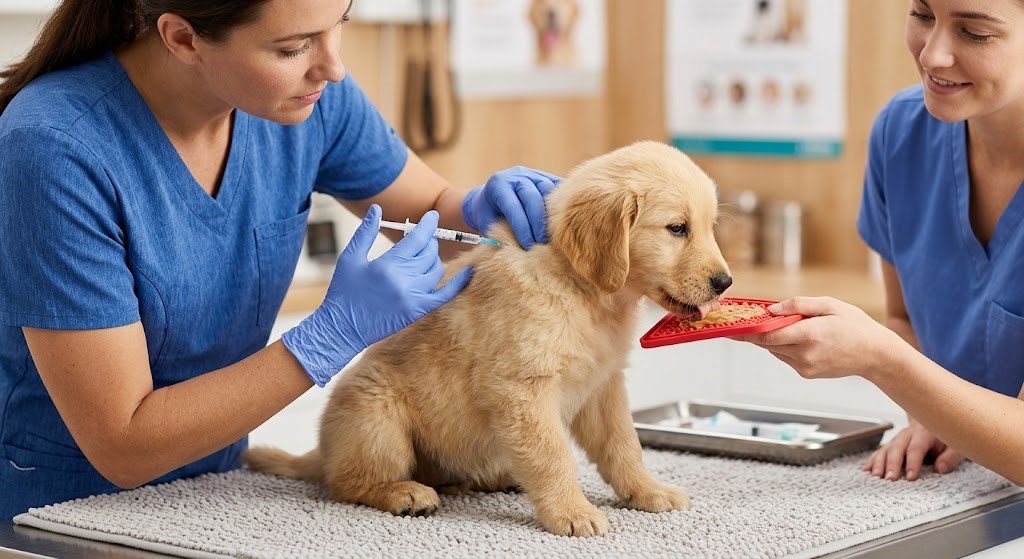
Puppies receive protective antibodies through their mother’s milk (colostrum). As these maternal antibodies fade between 6 and 16 weeks of age, a carefully timed series of core vaccines is required to build independent immunity.
Dog Core Vaccines
- DHPP / DAPP Combo: Protects against Canine Distemper, Adenovirus (Hepatitis), Parvovirus, and Parainfluenza.
- Rabies: A fatal neurological disease transmissible to humans. Required by law in almost all jurisdictions.
Dog Non-Core Vaccines
- Bordetella & Canine Influenza: Crucial for dogs visiting grooming salons, dog parks, or daycare facilities.
- Leptospirosis: Essential for dogs with outdoor access or contact with wildlife/standing water.
- Lyme Disease: Highly recommended in tick-heavy regions.
| Age / Stage | Recommended Vaccines | Shot Type |
| 6–8 Weeks | DHPP (Dose 1), Bordetella (Optional) | Core / Non-Core |
| 10–12 Weeks | DHPP (Dose 2), Leptospirosis, Lyme (Optional) | Core / Non-Core |
| 14–16 Weeks | DHPP (Dose 3), Rabies (1-Year), Leptospirosis/Lyme Boosters | Core / Non-Core |
| 1 Year Booster | DHPP Booster, Rabies Booster, Annual Non-Core | Core / Non-Core |
| Adult (Every 1–3 Yrs) | DHPP (Every 3 yrs), Rabies (1 or 3 yrs per law), Annual Non-Core | Core / Non-Core |
Feline Vaccination Schedule: Protecting Your Cat
Cats possess unique physiological vulnerabilities, and even strictly indoor cats require regular immunizations against airborne pathogens or accidental outdoor escapes.
Cat Core Vaccines
- FVRCP Combo: Protects against Feline Viral Rhinotracheitis (Herpesvirus-1), Calicivirus, and Panleukopenia (Feline Distemper).
- Rabies: Mandated across most regions due to public health safety.
- Feline Leukemia Virus (FeLV): Considered core for all kittens under one year old.
Cat Non-Core Vaccines
- FeLV (Adult Booster): Recommended for outdoor cats or multi-cat homes with known exposure risk.
- Chlamydia felis & Bordetella: Recommended during active disease outbreaks or high-density shelter environments.
| Age / Stage | Recommended Vaccines | Shot Type |
| 6–8 Weeks | FVRCP (Dose 1), FeLV (Dose 1 for kittens) | Core |
| 10–12 Weeks | FVRCP (Dose 2), FeLV (Dose 2) | Core |
| 14–16 Weeks | FVRCP (Dose 3), Rabies (1-Year) | Core |
| 1 Year Booster | FVRCP Booster, Rabies Booster, FeLV Booster | Core |
| Adult (Every 1–3 Yrs) | FVRCP (Every 3 yrs), Rabies (1 or 3 yrs per local law) | Core |
For officially published feline vaccine updates, consult the [External Link: Insert high-authority external URL here with anchor text: AAHA/AAFP Feline Vaccination Guidelines].
Managing Post-Vaccination Side Effects and Safety
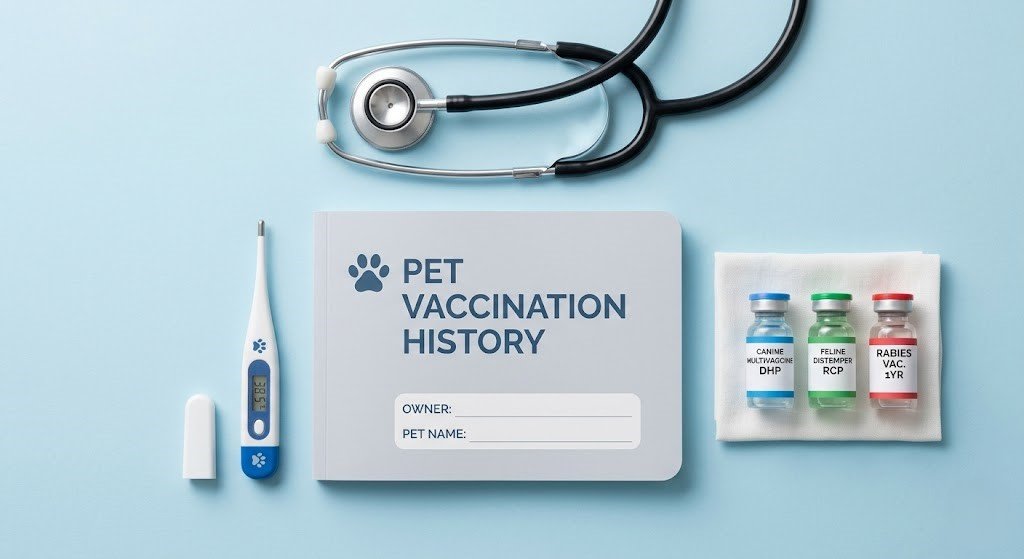
Vaccines trigger an immune response that can cause mild, temporary symptoms lasting 24 to 48 hours.
Common Mild Side Effects
- Slight lethargy or sleepiness
- Low-grade fever
- Mild localized tenderness or small swelling at the injection site
- Reduced appetite
Severe Reactions (Seek Immediate Veterinary Care)
While severe reactions are rare, contact an emergency vet if your pet experiences:
- Persistent facial swelling, hives, or skin puffiness
- Repeated vomiting or severe diarrhea
- Difficulty breathing or sudden collapse

Frequently Asked Questions (FAQs)
What happens if my puppy or kitten misses a scheduled booster shot?
If a booster shot is delayed past the recommended 3-to-4-week window, maternal antibody interference or waning immunity may leave them unprotected. Your veterinarian may need to restart or extend the booster series to guarantee lasting protection.
Do indoor cats really need to follow pet vaccination schedules for dogs & cats?
Yes. Indoor cats are still susceptible to airborne viral vectors like Calicivirus or herpesvirus brought indoors on clothes or shoes. Furthermore, Rabies vaccinations are legally required regardless of whether your cat goes outdoors.
How much do full pet vaccination schedules typically cost?
The full puppy or kitten vaccination series generally costs between $100 and $300 depending on your region and inclusion of non-core lifestyle options. Low-cost community clinics often offer core vaccines at reduced fees.
Conclusion
Adhering to comprehensive pet vaccination schedules for dogs & cats is a cornerstone of responsible pet ownership. Tailoring your pet’s immunizations based on age, geographical risks, and daily habits safeguards them against dangerous diseases while preventing community-wide outbreaks. Partner with your veterinarian regularly to evaluate your pet’s lifestyle, keep records up to date, and give your companion the healthiest life possible.